Alcobaça (Portugal), 1175–1225
Lisboa, Biblioteca Nacional de Portugal, Alc. 426, fols. 251v-252
(Image courtesy of the Biblioteca Nacional de Portugal. Public Domain)
-
![]()
Fol. 251v
-
![]()
Fol. 252r
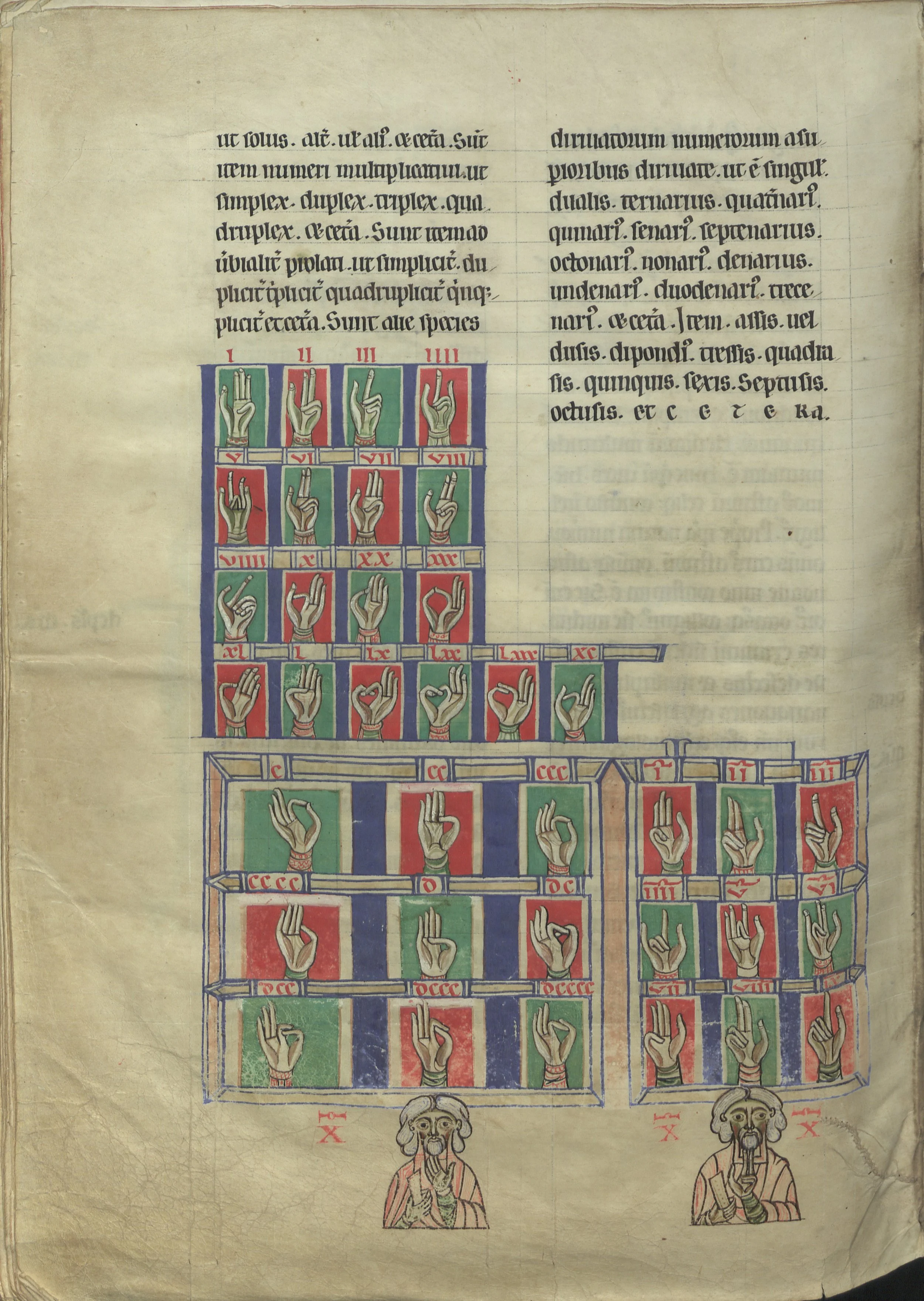
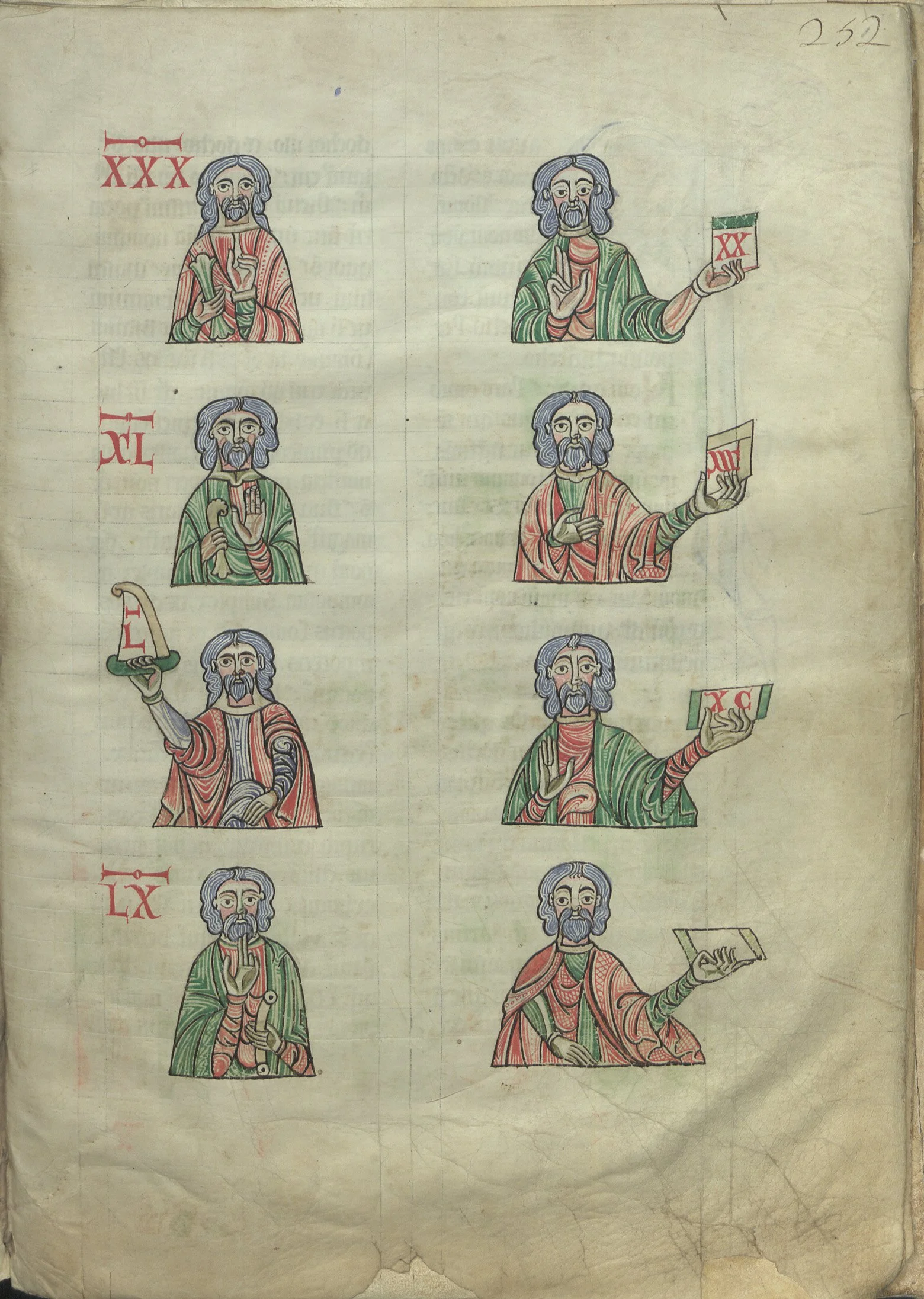
Overview
This manuscript, produced at the Cistercian abbey of Santa Maria de Alcobaça in Portugal between the late twelfth and the early thirteenth century, is primarily a grammatical compilation. Most of its contents are dedicated to grammar and lexicography, comprising works such as Papias's massive dictionary Elementarium.
The finger-counting images on folios 251v–252r are preceded by a short excerpt from De computo, an important treatise on calculation written around 820 by the Frankish scholar-monk Rabanus Maurus, which describes in detail how to represent numbers from 1 to 1,000,000 through hand gestures.
The Images
This manuscript from the Biblioteca Nacional de Portugal in Lisbon contains thirty-six depictions of hands representing all numbers below 10,000, as well as ten half-length human busts for higher values. It is among the most vividly colored works in the tradition, distinguished by a striking palette of green, blue, and red.
Alc. 426 has a “sister” manuscript, Santa Cruz 8, from the Augustinian Canonry of Santa Cruz de Coimbra, now preserved at the Biblioteca Pública Municipal do Porto. The two share almost identical contents and were produced in the same period, suggesting a close connection between their scriptoria. Both combine a hand grid and a series of human busts — a fairly typical layout in the medieval finger-counting tradition. What sets Alc. 426 sharply apart, however, is the arrangement of its thirty-six hand images: unlike any other known illuminated source, they are disposed not in a simple grid or rows, but in the distinctive shape of a chair.
A Chair of Gestures and mysterious busts
The shape of the hand grid is not a mere decorative accident. Standing over the shoulders of the two figures representing 10,000 and 20,000 — who function as bearers — the chair-shaped arrangement evokes a sedes gestatoria, the ceremonial carrying-chair associated in antiquity with upper-class transport and in the Middle Ages increasingly with ecclesiastical power. The Latin sedes gestatoria literally means a “seat for carrying,” but it can also mean a “seat of gesture.” By transforming a long sequence of hand positions into a single striking, punning shape, the illuminator created an image that is not only memorable but self-referential: a seat of gestures, carried by gestures, to be remembered through gesture.
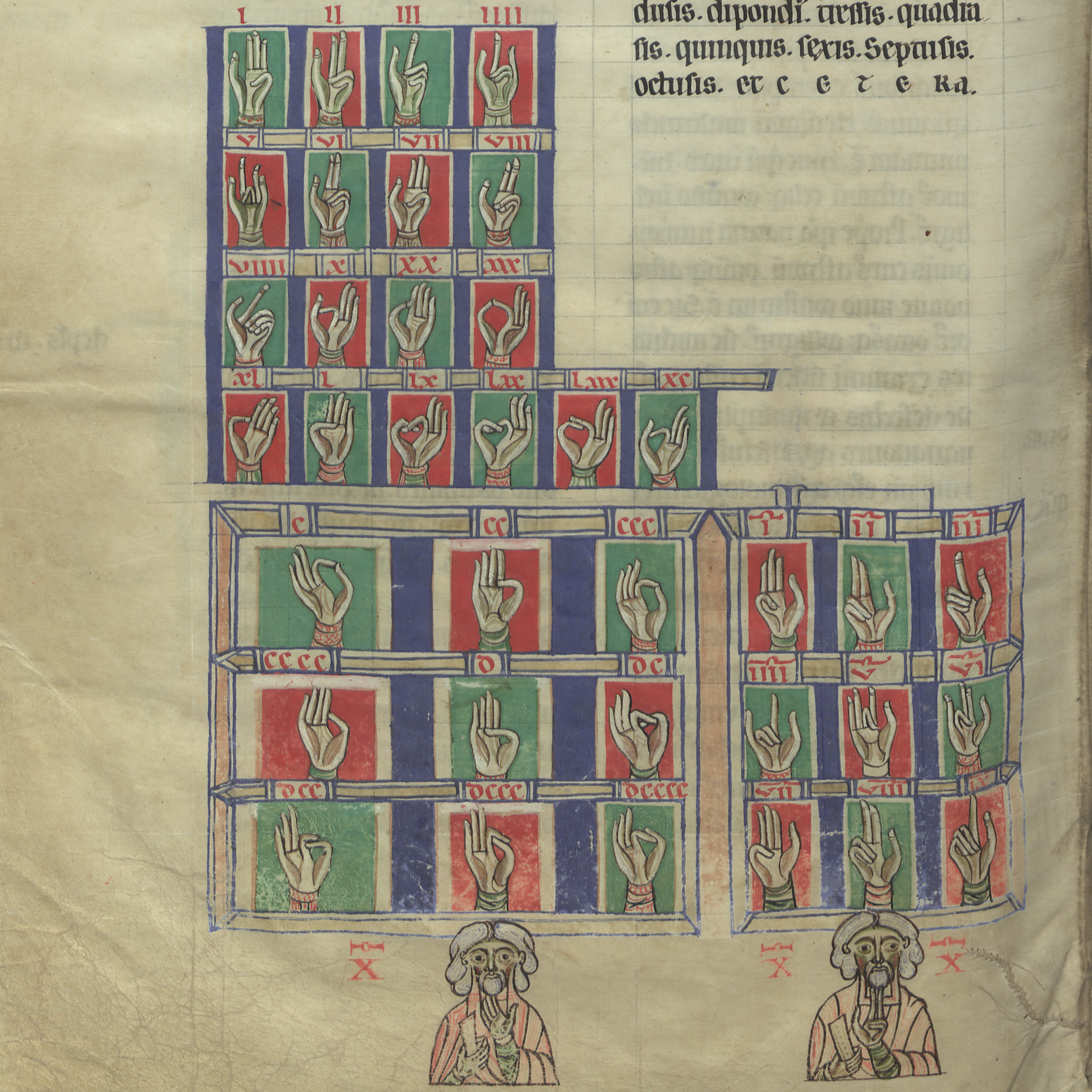
Numbers below 30,000
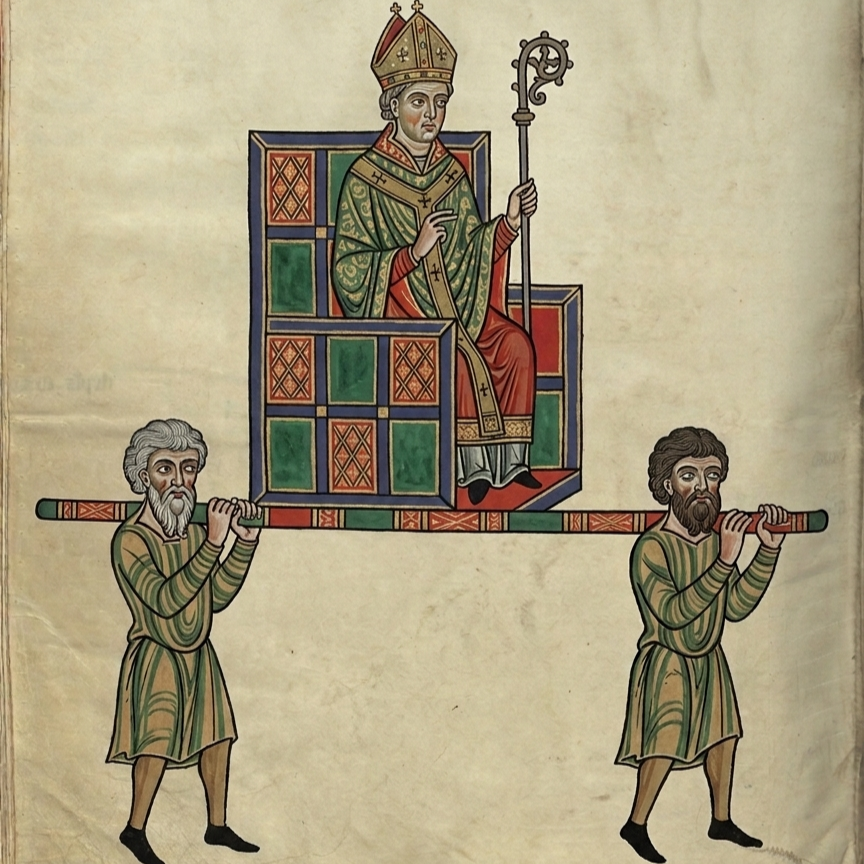
A sedes gestatoria
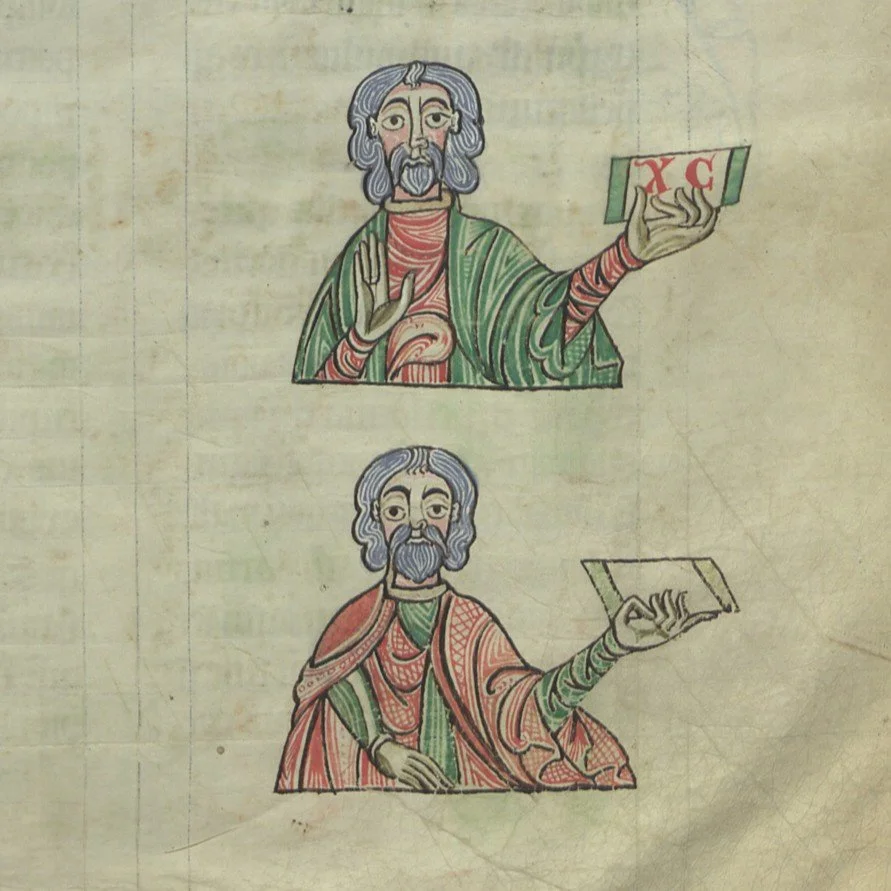
Two mysterious busts
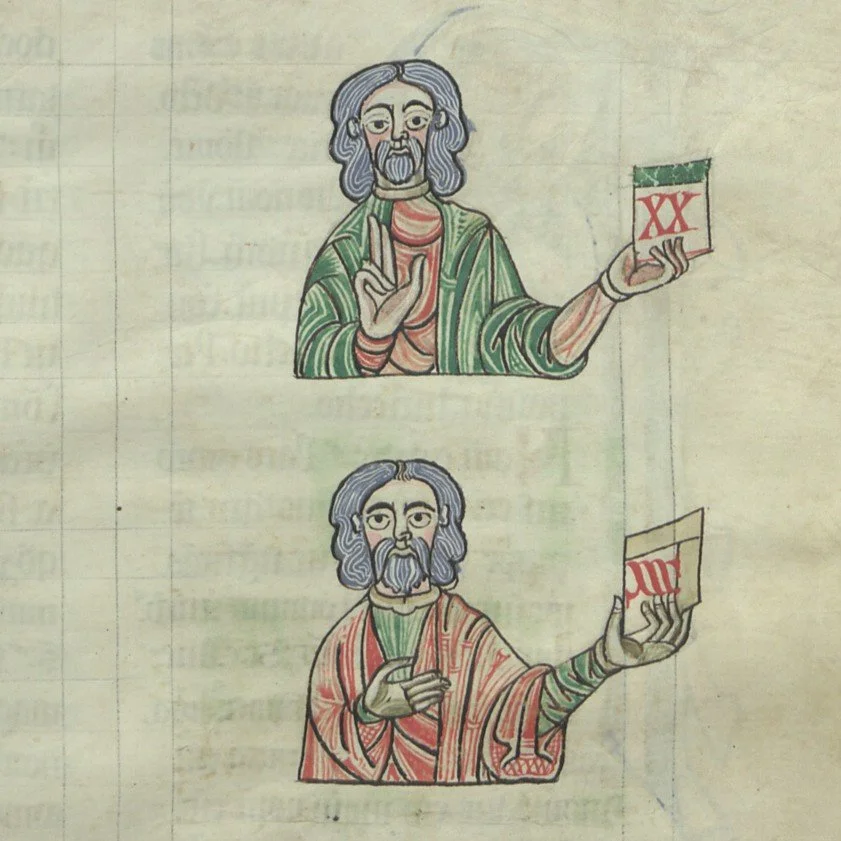
Two mysterious busts
(Image courtesy of the Biblioteca Nacional de Portugal. Public Domain)
The busts, which usually represent the tens and hundreds of thousands, appear incomplete here, extending only to 60,000. Four additional busts appear in the second column of fol. 252r, but they do not correspond to the gestures for 70,000 through 100,000, and their labels — the last of which is missing — only deepen the confusion. Whether these figures represent specific numbers, encode a hidden message, or reflect a faulty model remains an open question.
Find more information on this manuscript and a full digitization here.