North of Italy, 1018–1032
New York City, The Morgan Library & Museum, MS M.925, fols. 38r-39r
(Image courtesy of The Morgan Library & Museum, New York. All rights reserved)
-
![]()
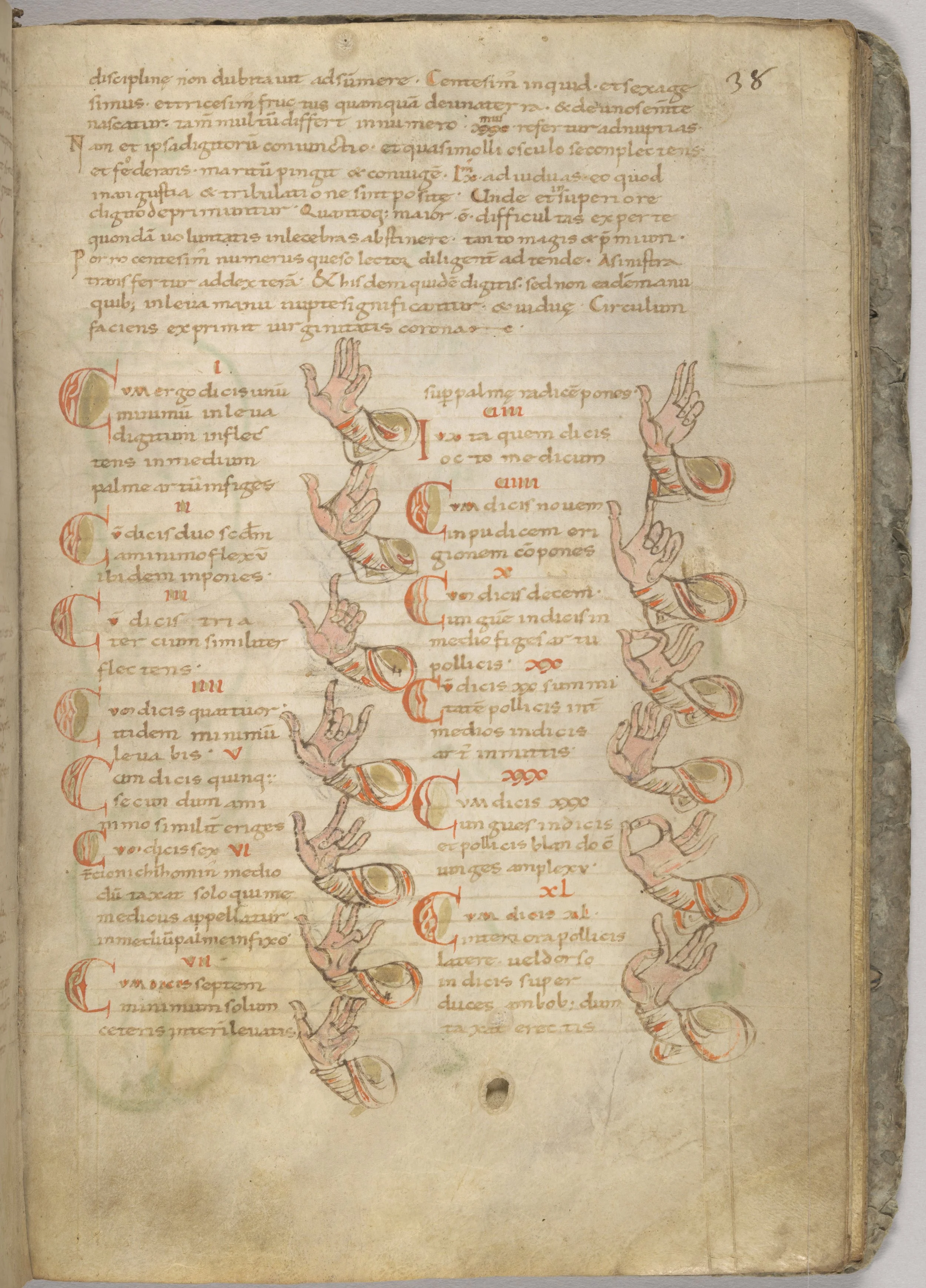
fol. 38r
-
![]()
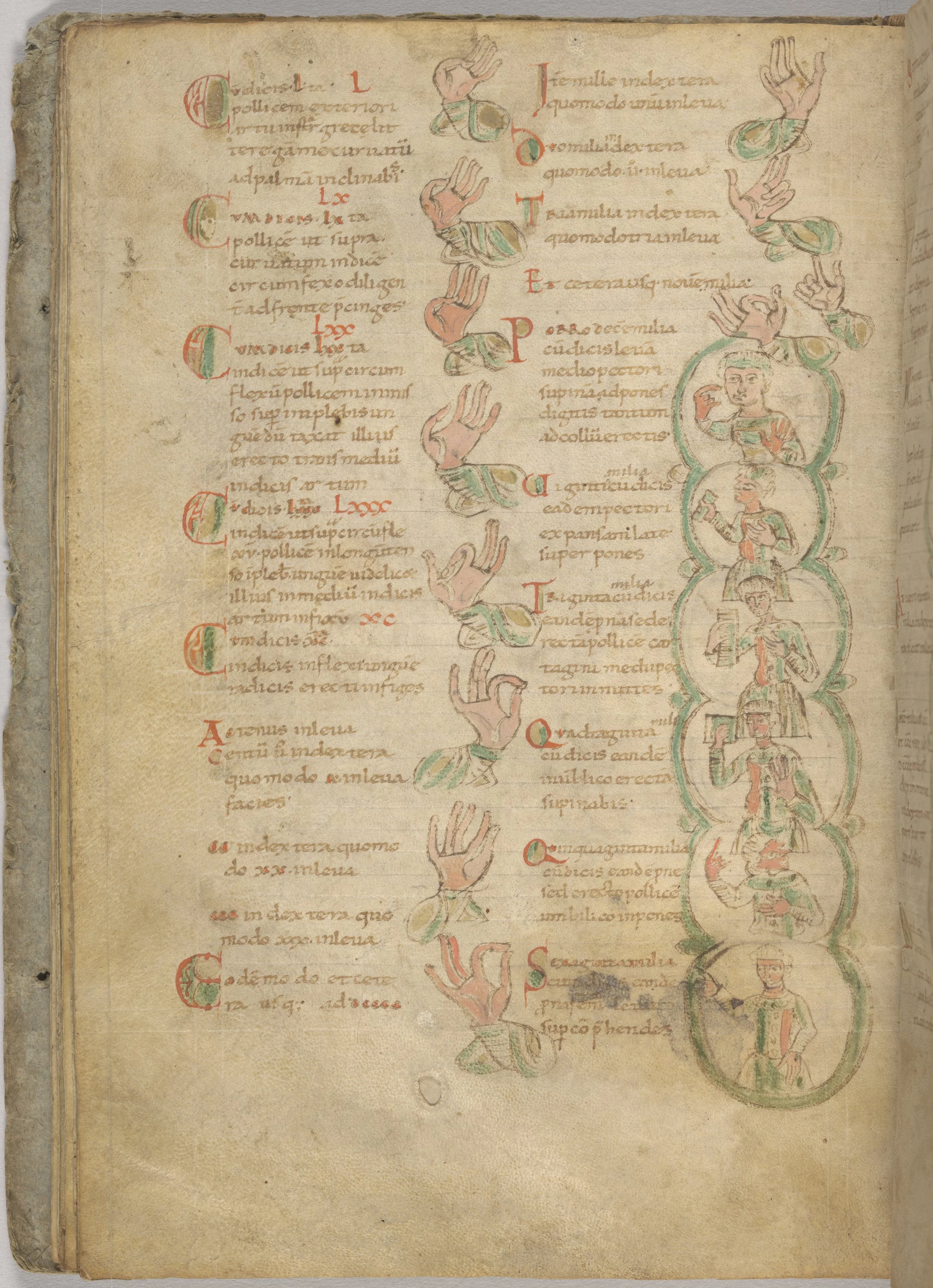
Fol. 38v
-
![]()
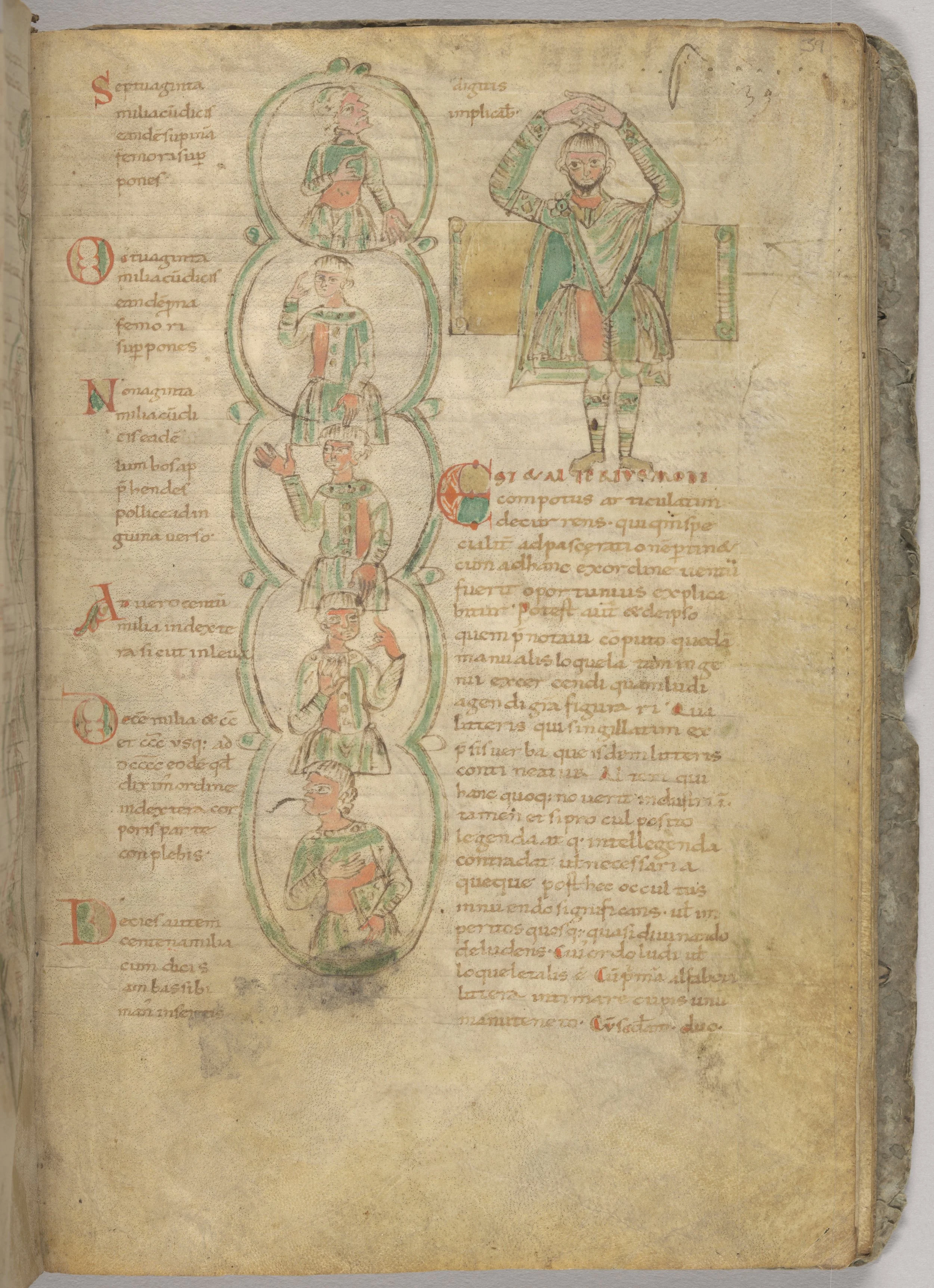
Fol. 39r
Overview
This small but fascinating manuscript was written and illuminated in northern Italy in the early eleventh century, possibly in Piacenza. It belongs to the rich medieval tradition of computus — the study of timekeeping and calendrical calculation — and brings together a wide range of materials, including several amazing tables and diagrams.
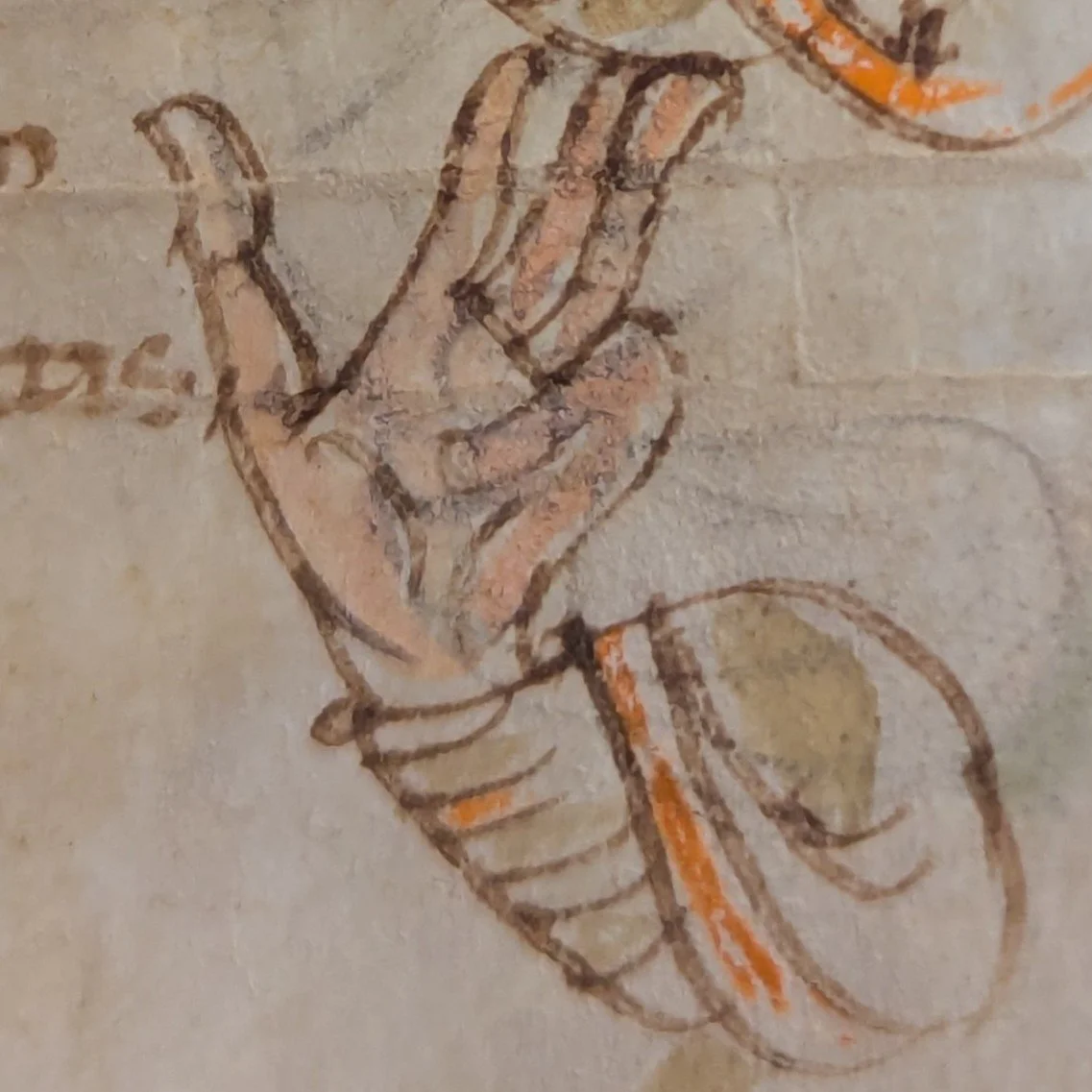
Folios 37v–39v contain the opening chapter of the Venerable Bede’s influential treatise On the Reckoning of Time. This chapter, titled On the Computation or Language of the Fingers, explains the ancient system of finger-counting, in which a specific hand gesture corresponds to each number from 1 to 1,000,000.
The images
In this manuscript from the Morgan Library in New York, Bede’s text is accompanied by a carefully designed visual program: 25 drawings of hands (fols. 38–38v), 11 half-length human figures enclosed within interlinked green roundels (fols. 38v–39), and a full-length figure demonstrating the gesture for 1,000,000 (fol. 39).
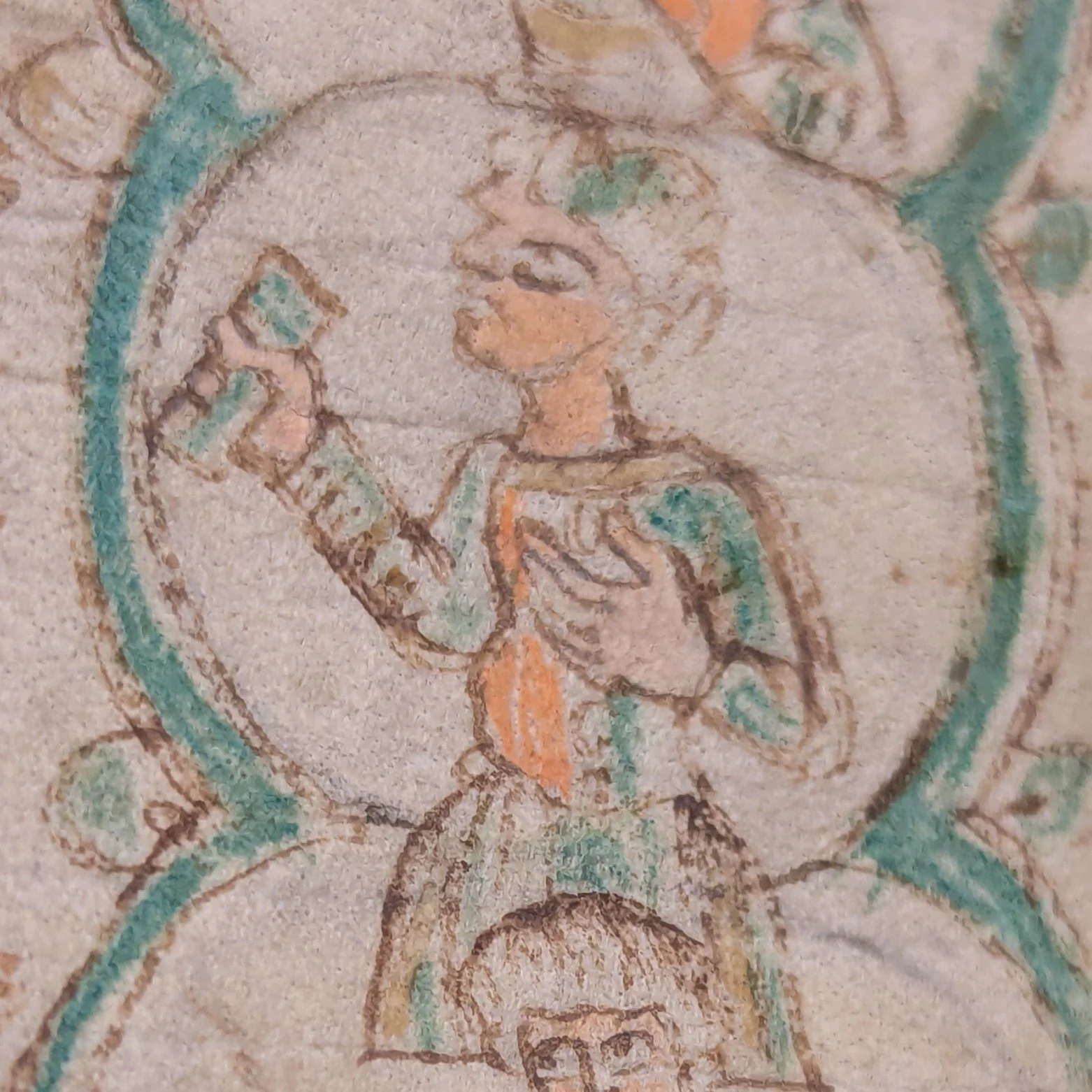
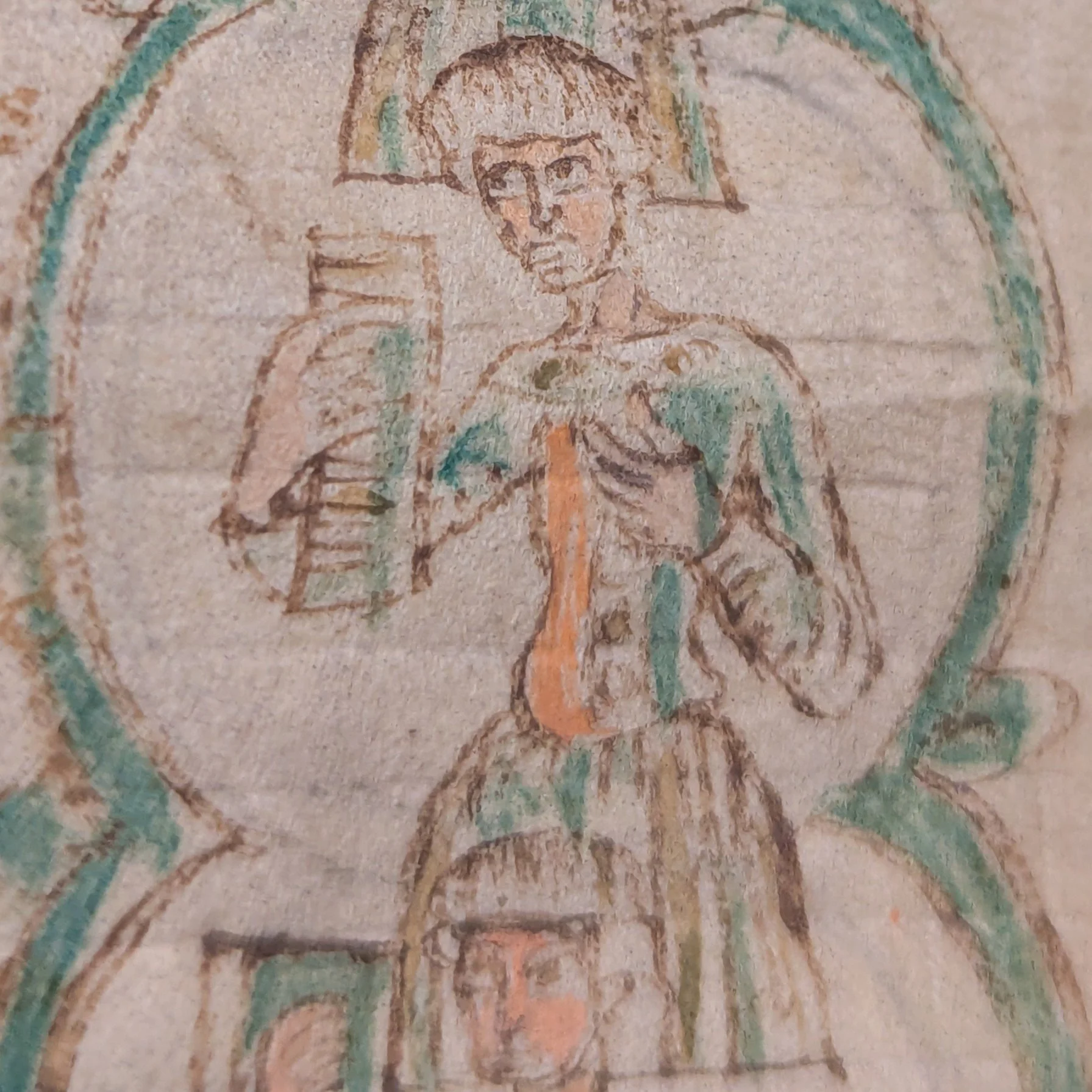
The sequence of hands represents all numbers below 10,000, omitting certain right-hand gestures to avoid redundancy, as the hundreds and thousands are represented on the right hand using the same gestures as the units and tens on the left. The series of busts depicts the tens and hundreds of thousands, again omitting some right-hand gestures to prevent redundancy.
The text is arranged in two columns, with each description of a gesture paired directly with its painted representation in green and orange tones. This same layout — where image and text are organically integrated and vertically aligned — appears in at least three other manuscripts produced in the central Middle Ages: Amiatinus III from the Biblioteca Medicea Laurenziana in Florence, MS 431 from the Bibliothèque Municipale de Reims, and Cod. 12600 from the Österreichische Nationalbibliothek in Vienna.
Ambiguous Gestures and Memory Tricks
Some of the gestures in this manuscript are ambiguous. For example, the images for 1 and 7 appear almost identical. This ambiguity is common in medieval illustrations of Bede’s text and likely reflects a practical challenge: distinguishing between what Bede describes as the “middle” and the “root” of the palm. According to his instructions, the number one is formed by placing the little finger on the “middle” of the palm, while seven requires placing it at the “root.”
This and similar inconsistencies suggest that the illuminator may not have been fully familiar with the finger-counting system.
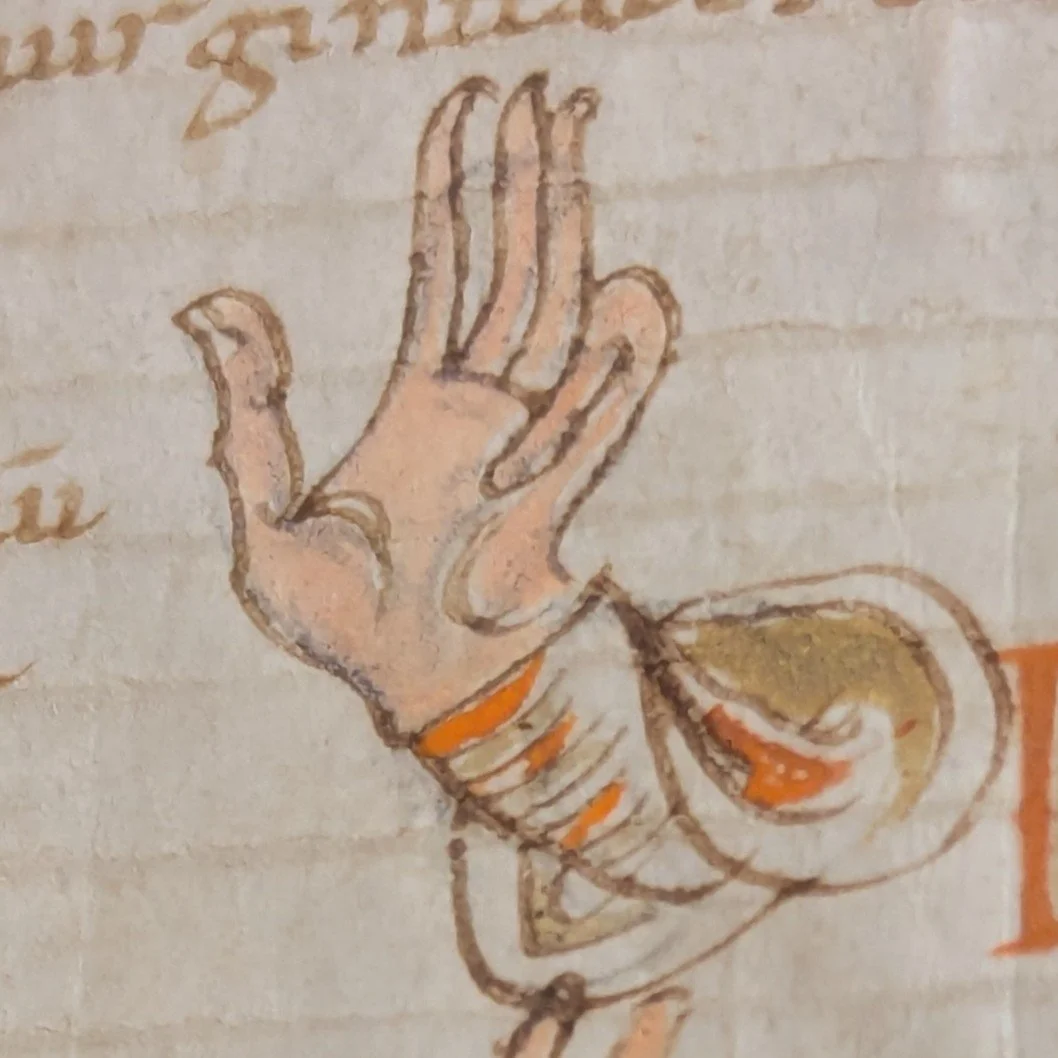
Number 1
Number 7
Number 20,000
Number 30,000
(Image courtesy of The Morgan Library & Museum, New York. All rights reserved)
Despite their apparent roughness, however, these images conceal a sophisticated mnemonic strategy. In the sequence of busts, each figure forms a number with one hand following Bede’s instructions, while the other hand either holds an object or points in a particular direction. These elements are not random but function as deliberate visual cues designed to aid memory. Drawing on a long, rich tradition of visual rhetoric, many rely on etymological wordplay. For instance, the figures representing 20,000 and 30,000 — whose gestures involve placing the hand on the chest (pectus, pectoris in Latin) — are shown holding an object resembling a comb (Latin for “combing” is pecto, pectere). Such associations would have helped users remember and internalize this complex numerical system.
Find more information on this manuscript here.